
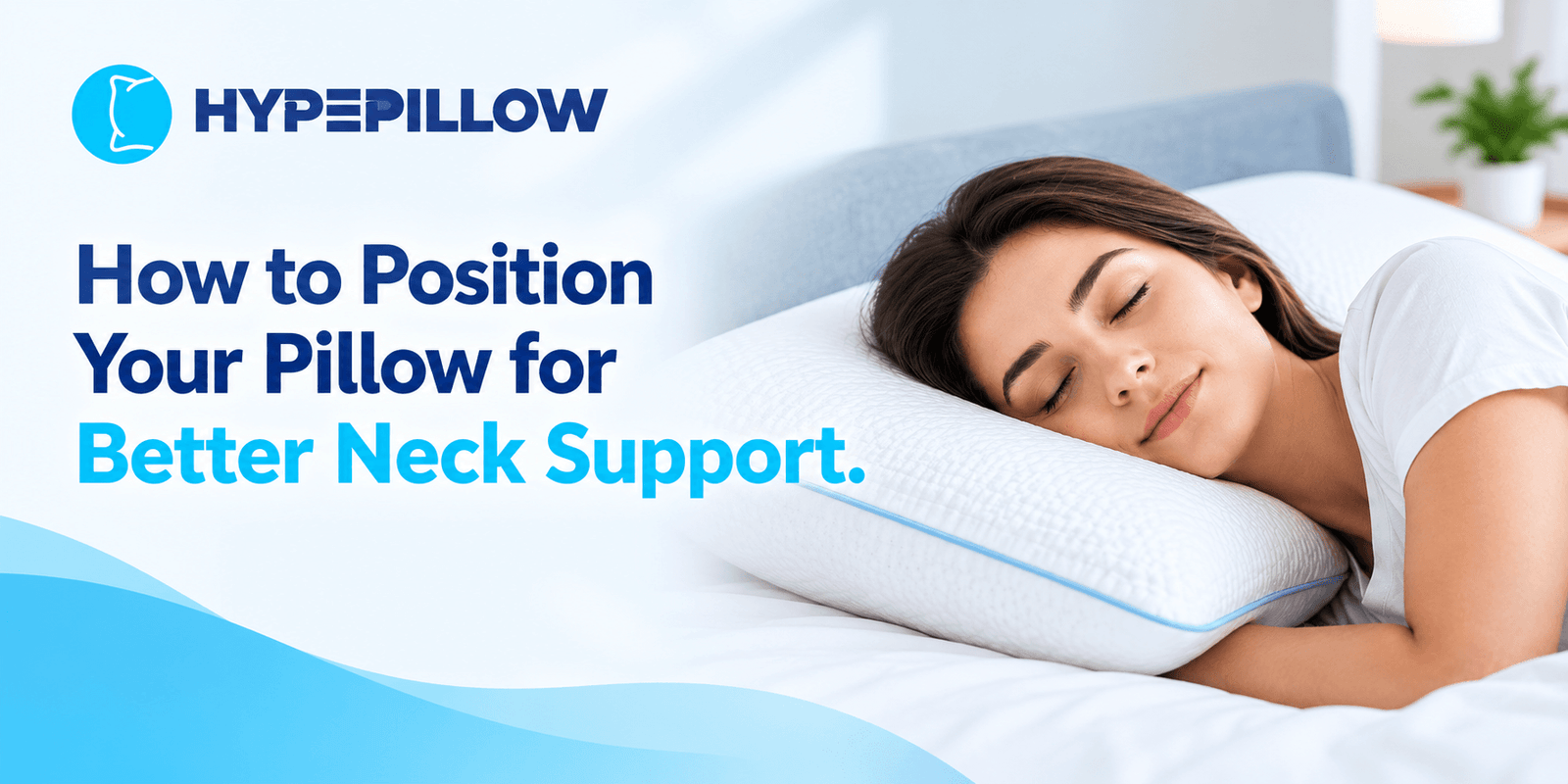
The best pillow for neck pain fills the gap between your head and your shoulder without tilting your neck up or down. Side sleepers need a higher, firmer pillow. Back sleepers need a medium height. Stomach sleepers need very little. Getting the height right matters more than the brand or the filling.
Your neck has a natural forward curve. When you lie down, a pillow has one job: hold your head so that curve stays close to where it sits when you are standing with good posture.
A flat pillow lets your head drop below shoulder level, stretching the muscles on one side of your neck for seven or eight hours straight. A pillow that is too thick pushes your head up at an angle and does the same damage in reverse. Either way, you wake up stiff, and it feels like the pain arrived from nowhere.
This is why morning neck pain that fades through the day is almost always a pillow problem rather than an injury. If the stiffness is worst when you wake and eases after a hot shower and some movement, your sleeping setup is doing it.
Choose Your Height by Sleeping Position
Loft, meaning the height of the pillow once your head is resting on it, is the single most important factor when choosing a pillow for neck pain.
Side Sleepers: You need the most height. The distance between your ear and the mattress is roughly the width of your shoulder, and the pillow has to fill that entire gap. Broad-shouldered sleepers usually need more loft than they expect, and this is the group most likely to be sleeping on something far too thin.
Back Sleepers: Medium loft. Enough to support the hollow behind your neck, not so much that your chin gets pushed toward your chest. If you wake up with a sore throat or the feeling that your airway was cramped, your pillow is too tall.
Stomach Sleepers: Almost nothing. A very thin pillow, or none at all. This position already turns your neck sideways for hours, so extra height only adds to the strain. If you have ongoing neck pain and sleep on your stomach, changing position will help more than changing pillows.
Combination Sleepers: If you move between positions all night, a medium-loft pillow that adapts as you shift works better than a rigid contoured shape locked to one posture.
Which Filling Gives the Best Neck Support
Fillings behave very differently under the weight of a head.
Micro Ball Fibre: Fibre rolled into tiny soft balls that move against each other. It gives where you press and springs back when you shift, so it holds its height through the night rather than flattening by 3 am. It suits most sleepers, stays breathable through hot weather, and is the filling in our medicated pillow for neck pain.
Memory Foam: Moulds closely and holds one shape well. The trade-off is heat retention, which is noticeable through a Pakistani summer, and a firmness that some people find unforgiving in cold months.
Standard Polyester Fibre: Soft and inexpensive, but it compresses into a flat pad within a few months. This is the filling behind most pillows that stop working after a single season.
Feather and Down: Feels luxurious and looks good, but needs constant reshaping and rarely holds height under a heavy head all night.
For anyone searching for the best pillow for neck support in Pakistan, micro ball fibre is generally the safest pick. It balances softness against consistent height and handles heat far better than foam.
How Firm Should the Pillow Be
Firmness and height are related but not the same thing. A pillow can be tall and still useless, because it collapses the moment your full head weight lands on it.
Here is a quick test. Press your hand firmly into the pillow, then lift your hand away. If the dent stays, the filling has lost its structure and it will not hold your neck either.
As a rule, aim for medium firmness if you sleep on your back and medium to firm if you sleep on your side.
Five Signs Your Pillow Is Causing Your Neck Pain
- You wake up stiff and loosen up within an hour of getting out of bed
- You wake with a dull headache at the base of your skull
- You fold the pillow in half or stack two to get enough height
- You wake with one arm tucked under the pillow for extra support
- The pillow has visible dips, lumps, or has gone flat through the middle
Any two of these together usually mean it is time to replace it.
How to Test a Pillow at Home
Lie down in your normal sleeping position with the pillow under your head and neck. Have someone look at you from the front, or take a photo.
Your nose should line up with the centre of your chest, and your neck should form a straight line with your spine. If your head tips down toward the mattress, you need more height. If it tips upward, you need less.
Give a new pillow at least a week before judging it. Your muscles have adapted to the old position and take a few nights to settle into the new one.
When to Replace Your Pillow
Most fibre pillows last one to two years with daily use. Better fillings last longer, but nothing lasts forever. If yours no longer springs back, or you find yourself adjusting it several times a night, its working life is over.
Two habits extend it: wash the cover regularly rather than the whole pillow, and shake the pillow out each morning to redistribute the filling.
Getting It Right
Start with your sleeping position, match the height to it, then pick a filling that holds that height night after night. That order matters more than any feature on a product page.
Our medicated pillow is built around exactly this: micro ball fibre for consistent support, a breathable cotton cover, and a 30-night trial so you can test it in your own bed. If it is not right for you, send it back for a full refund.
FAQS
Is a hard or soft pillow better for neck pain?
Medium firmness suits most people. Too soft and your head sinks through, too hard and your neck is pushed out of line. Firmness should match your sleeping position, not how the pillow feels in your hand.
Can two pillows help neck pain?
No. Stacking pillows creates an unstable, uneven surface that tilts your head forward. If you need two, buy one pillow with the correct loft instead.
How long before a new pillow helps?
Most people notice a difference within three to seven nights. If there is no improvement after two weeks, the height is likely wrong for your position.
Does a pillow cure cervical pain?
No pillow treats a medical condition. A well-fitted pillow removes one common cause of strain and supports better sleeping posture. Persistent or severe pain should be assessed by a doctor or physiotherapist.








Leave A Comment