
Walk into any bedding shop, and you will get the same pitch. The salesman presses his palm into a block of memory foam, holds it up so you can watch the handprint slowly disappear, and looks at you like the argument is finished.
It is a good trick. It tells you almost nothing about how that pillow behaves at 3 am in June with the fan on and your face pressed into it.
Meanwhile, the fiber pillow sitting next to it gets no demonstration at all, because there is nothing dramatic to show. You press it, it bounces back, that is that. So the memory foam vs fiber pillow decision gets made on theatre instead of sleep, and plenty of people end up with the wrong one. Here is the honest comparison, and where our pillow collection sits in it.
The short answer: Memory foam typically conforms gradually to pressure and body heat, while many fiber-filled pillows feel more responsive and can be easier to reshape. The experience varies by pillow design, filling, and loft.
For many sleepers in warm climates, temperature can be an important factor. Some memory foam pillows may retain more warmth, while many fiber-filled pillows allow more airflow.
What Each One Actually Does Under Your Head
Memory foam responds to warmth and pressure. Your body heat softens the surface, the foam sinks under your head, and it settles into a shape that matches you. It stays in that shape until you move, then takes a few seconds to reshape.
Fiber works differently. It resists compression and pushes back. Loose fiber balls shift around each other, so the pillow adapts instantly as you move rather than reforming after the fact.
That difference sounds small on paper. In practice, it decides whether the pillow feels like it is holding you or holding you still.
Support: Which One May Suit Your Neck Better?
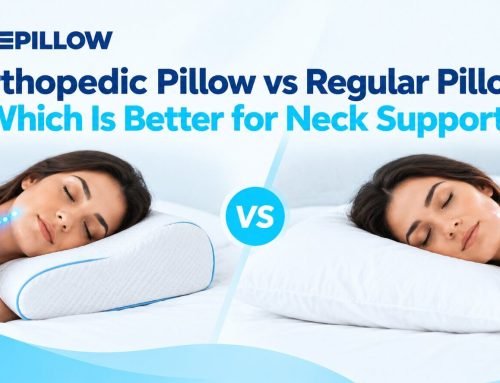
Both materials can provide comfortable neck support when the pillow height and design suit the sleeper. Height matters more than material here, and this is where most buyers go wrong.
A well-designed memory foam pillow can provide relatively consistent support by contouring around the head and neck, although performance varies by foam type, density, and pillow design. What you lie down on is what you wake up on. The catch is that consistency only helps if the height suits you in the first place. A contoured foam pillow that is too tall pushes your chin forward, and there is nothing you can do about it, because the shape is fixed.
A quality fiber pillow holds its height too, but you can adjust it. Push it, shape it, move fill towards your neck and away from your head. For side sleepers who need more loft under the shoulder gap, that flexibility is genuinely useful. Our medicated pillow for neck pain is built on micro ball fiber for exactly that reason.
Sleepers who remain in one position may prefer a more structured pillow, while people who change positions frequently may appreciate a pillow that is easier to reshape.
The Heat Problem Nobody Mentions in the Shop
This is the part that matters most in Pakistan and gets discussed the least.
Memory foam is dense. Density traps warmth, and it responds to warmth by softening further, so the longer your head rests there, the hotter and softer that spot becomes. Gel layers and ventilation holes help a little. They do not solve it.
Many fiber-filled pillows have a more open structure that can allow greater airflow, which some sleepers may find more comfortable in warmer rooms. You flip a foam pillow looking for the cool side, and often find there isn’t one. That is why so many people buy an expensive foam pillow in winter, love it for two months, and quietly retire it by May.
If you sleep hot, or your room does, this single point settles the memory foam pillow vs fiber pillow question before you get to anything else.
Smell, Weight and the First Week
Some new memory foam products may have a noticeable odour when first unpacked, which often reduces after airing. It usually fades within a week of airing out, but some people cannot tolerate it at all, and it is worse in a closed room.
Foam is also heavier and harder to handle. You cannot fold it, punch it, or push it into position. Some people find that reassuring. Others find it feels like sleeping on furniture.
Fiber pillows are often lighter and may feel more familiar to sleepers who are used to traditional pillows, although comfort and adjustment time vary from person to person. What you lose is that slow moulding sensation, which is genuinely pleasant if you sleep still.
Cleaning and How Long Each Lasts
Many memory foam pillows should not be machine washed or fully soaked because excessive water and agitation can damage the foam. Always follow the manufacturer’s care instructions. So you are limited to spot cleaning the surface and washing the cover. In a humid climate where pillows absorb sweat quickly, that is a real limitation.
Fiber pillows wash. Gentle cycle, mild detergent, dry them flat in the sun, and they come back clean and usable. That alone extends their life in our conditions.
On lifespan, good foam holds its shape for around three years and then starts sagging in the middle where your head sits. Good fiber lasts two to three years before it flattens. Neither is permanent, and both need replacing long before the fabric looks worn.
Which One Should You Choose?
Choose memory foam if you sleep mostly in one position, sleep cool, want a fixed shape you never adjust, and do not mind that it cannot be washed.
Choose fiber if you turn during the night, sleep hot, share a bed in a warm room, want to adjust the height yourself, or want a pillow you can wash every few months.
For most households here, the climate makes that decision. A pillow you fight with in summer is a pillow you stop using, no matter how well it performed in December.
Mistakes People Make When Comparing
- Judging a pillow by squeezing it with a hand instead of lying on it.
- Buying contoured foam without checking whether the height suits their sleeping position.
- Assuming higher price means better neck support.
- Ignoring how hot their room gets from April onwards.
- Stacking a new pillow on the old one and blaming the new pillow for the result.
Key Takeaways
Memory foam gives fixed, consistent support and traps heat. Fiber gives adjustable support, breathes, and can be washed. Neither is universally better, and height matters more than the material either way.
Match the pillow to your sleeping position first, your room temperature second, and your budget last. Browse our pillow range and pick the loft that fits how you actually sleep.
FAQs
Which is better, memory foam vs fiber pillow, for neck pain?
Neither material is automatically better for everyone. A suitable pillow should provide comfortable height and support for your sleeping position. Memory foam offers a more contoured feel, while fiber-filled pillows may be easier to reshape.
Is a memory foam pillow hotter than a fiber pillow?
It can be. Some memory foam pillows retain more body heat than more breathable fiber-filled designs, although cooling covers, ventilation, and construction can make a noticeable difference.
Can memory foam pillows be washed?
No. Water damages the internal structure permanently, so cleaning is limited to spot treatment and washing the cover. Fiber pillows can be machine washed gently and dried flat in the sun.
Which lasts longer between the two?
Foam typically holds up around three years before sagging where your head rests. Fiber lasts two to three years before flattening. Both lose support well before the fabric shows any wear.
Is memory foam worth the higher price?
It depends on your preferences. Memory foam may appeal to sleepers who like a more contoured, structured feel, while fiber may suit those who prefer easier reshaping, lighter weight, and potentially greater airflow. Price alone does not determine which pillow will suit you better.







Leave A Comment